Services


We focus on working with natural patterns to both meet the needs of our clients and support ecosystems to thrive.
Explore the list of services below to learn more about what we offer.
AirSpade Services
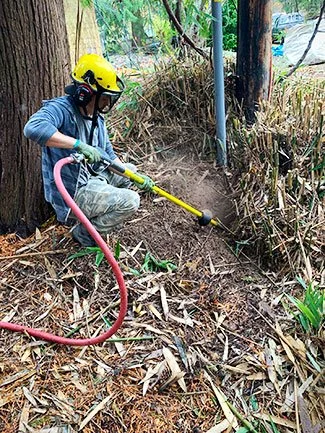
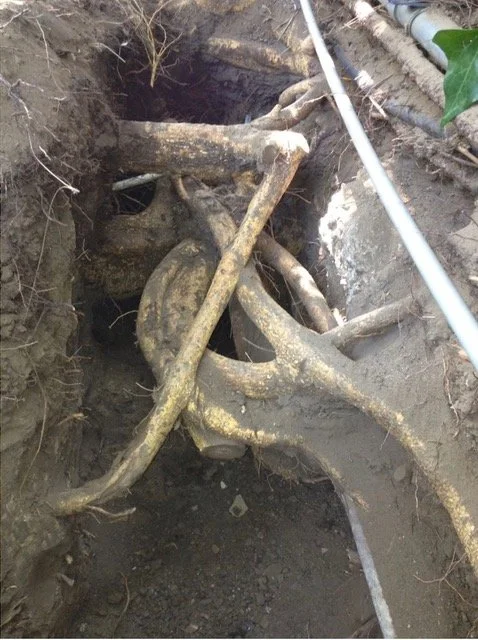
Air Spade services offer a non-destructive method for soil excavation, making them an environmentally friendly option for landscaping and tree care. Compressed air is used in lieu of heavy machinery or hand digging, thereby leaving roots of mature trees unharmed. Other uses for air spading includes root pruning, soil aeration, and other types of tree care. We recommend contacting a licensed arborist for the latter services.
Bluff Revegetation (Bio-Stabilization)
Carved by glaciers over 10,000 years ago, these geologically young landforms are primarily composed of poorly consolidated sediments—sand, gravel, silt, and clay, making Puget Sound’s high bluffs prone to erosion, landslides, and wave undercutting.
While these are natural processes, human activity has greatly increased the likelihood of such events. Uninformed tree cutting and native vegetation removal in favor of horticultural exotics undermine the matrix of root stability found in a healthy ecosystem.
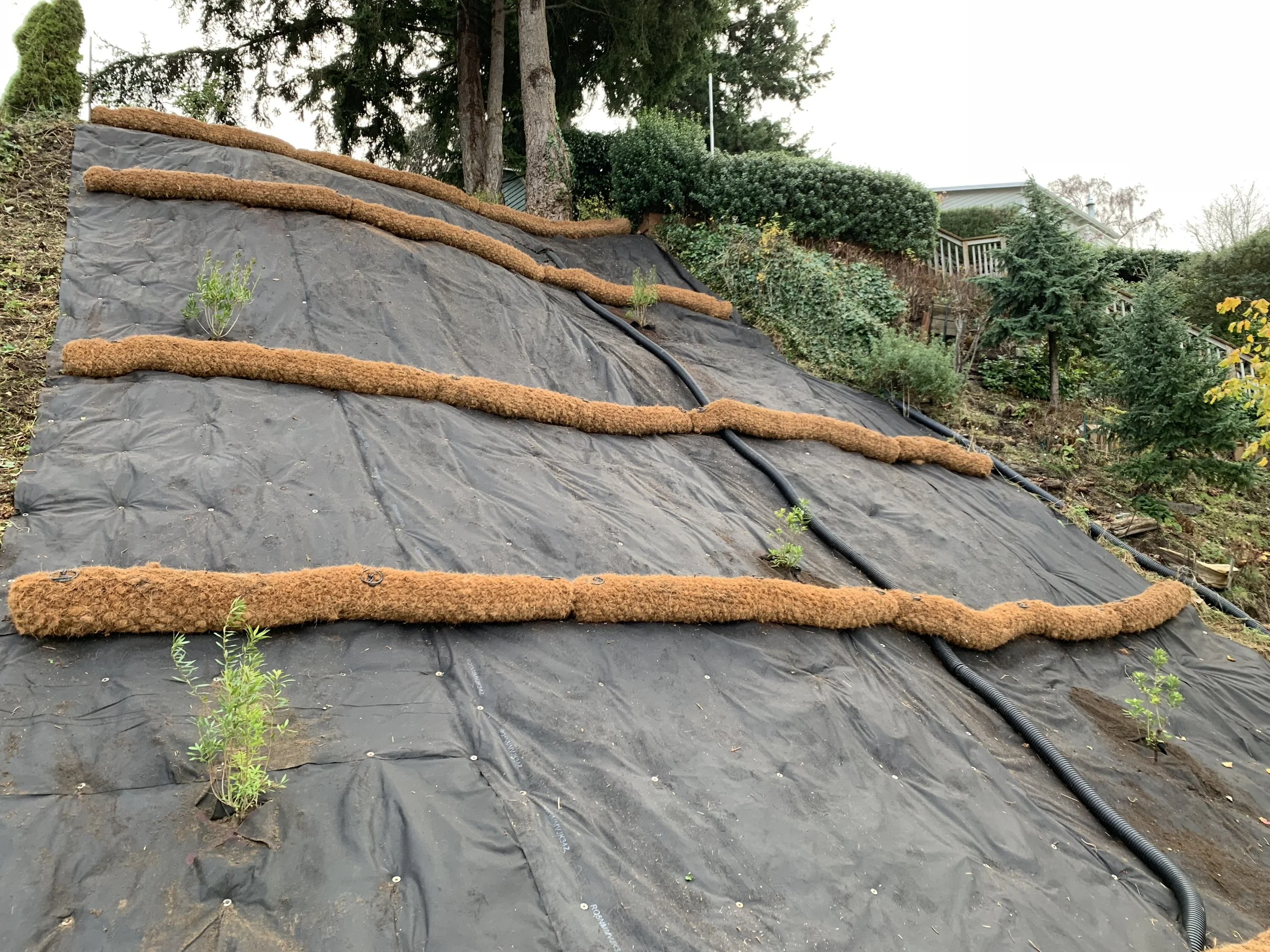
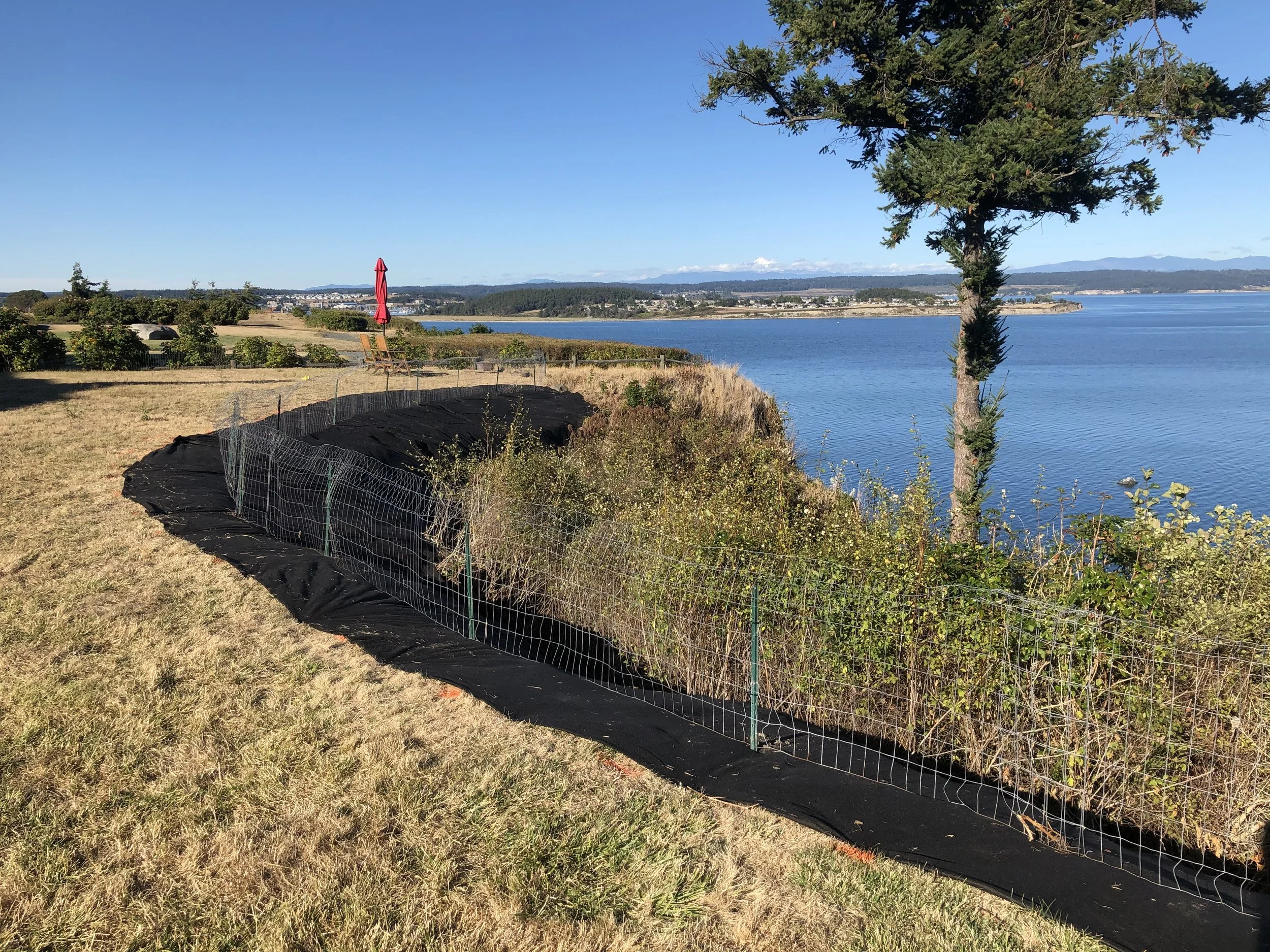
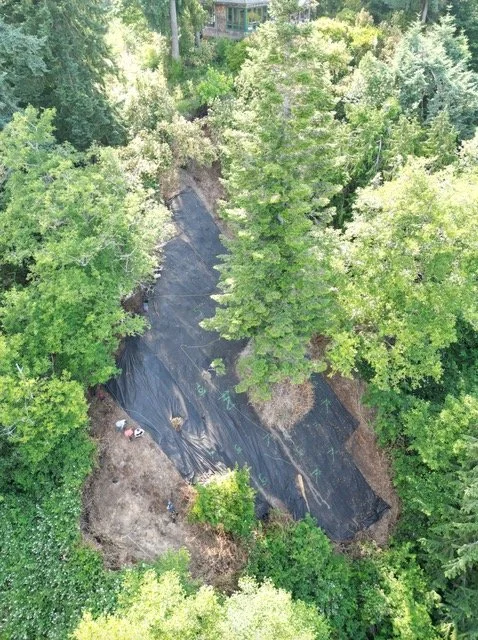
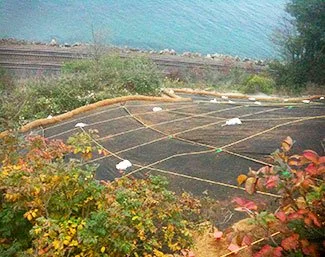
Our goal is to restore the health, stability, and beauty of your coastal bluff and adjoining uplands while not sacrificing the stunning views our region is known for. Through proper preparation and the strategic use of geo-textiles we’ve developed site-specific planting processes that have a high rate of success.
Drip Irrigation Design and Installation
Website under construction - more coming soon!
Emergency Landslide Response
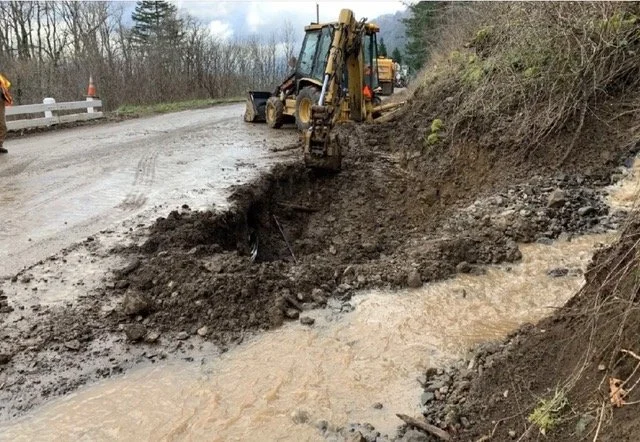
Even a minor landslide (small soil slip, shallow debris flow, or slope sloughing) can still escalate if ignored. The goal of early response and mitigation is to open thoroughfares, stabilize quickly, control water, and prevent a larger failure. Safety is a priority. A stabilization and restoration plan takes time as there are many factors to consider. It’s prudent, and often crucial, to get an immediate temporary cover on the slope to prevent further erosion. This enables the contractor and the client to move ahead with the creation of a long term restoration plan knowing the site has been secured.
Environmental Consultation
As restoration consultants we help clients repair, rehabilitate, and manage natural ecosystems that have been degraded, damaged, or destroyed while also providing strategic guidance to meet sustainability goals. Importantly, educating yourself early on can in many cases prevent damage before it occurs.
Services include:
Site Assessment & Ecological Surveys -Evaluating soil, vegetation, hydrology/drainage, and wildlife to understand current conditions
Restoration Planning & Design - Developing plans to restore ecosystems such as bluff and shoreline, woodlands and wetlands
Regulatory Consulting & Permitting - Navigating environmental laws and assisting clients in securing permits required for restoration or development projects
Habitat Restoration & Enhancement - Removing invasive species, establishing native plant communities, and improving wildlife habitat
Monitoring & Adaptive Management - Tracking restoration progress and adjusting strategies to ensure long-term success
Sustainability & Mitigation Strategies - Advising on ways to offset the environmental impacts of site development. The best time to call in an environmental consultation is BEFORE you develop your driveway and structures!
Environmental Education
We love to share our knowledge and experience with a variety of groups from high schools and colleges to Home Owner’s Associations. We believe its of the utmost importance to help people understand how the natural world works, how humans affect it, and how to make informed decisions that support a healthy environment.
Presentations can range from a couple of hours for introductory overviews to weekend long in-service trainings.
Most of the damage we are called to mitigate could have been avoided with timely awareness and education.
Explore our educational resources for more details.
Environmental Maintenance and Monitoring
Website under construction - more coming soon!
Erosion Control
Erosion control refers to the techniques and strategies used to prevent or minimize soil erosion on land. Soil erosion occurs when soil is removed or displaced by wind, water, or other natural forces, leading to loss of fertile soil and degradation of land. Erosion control methods can include planting vegetation, building retaining walls, installing erosion control mats, using mulch and ground cover, and implementing proper land management practices. These measures help to stabilize soil, reduce runoff, and protect the natural environment. Erosion control is important for maintaining soil health, preventing sediment pollution in water bodies, and preserving the stability and productivity of land.
Geotextiles
Website under construction - more coming soon!
Habitat Conservation
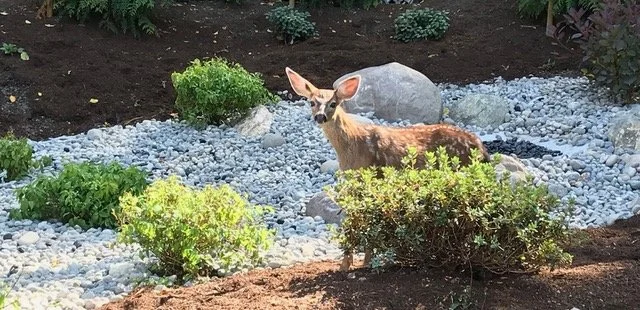
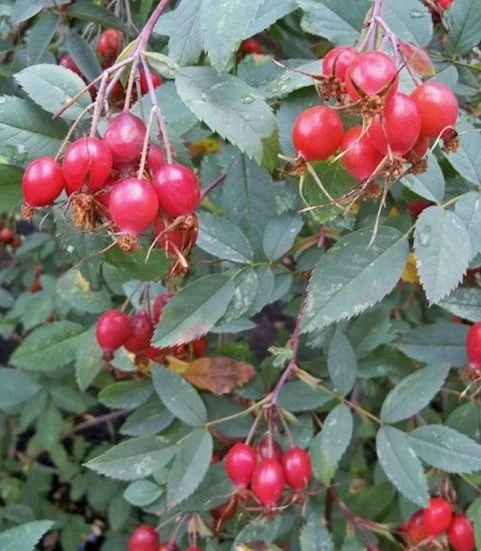
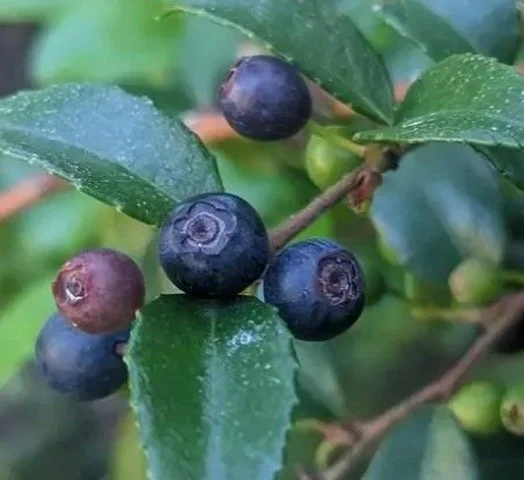
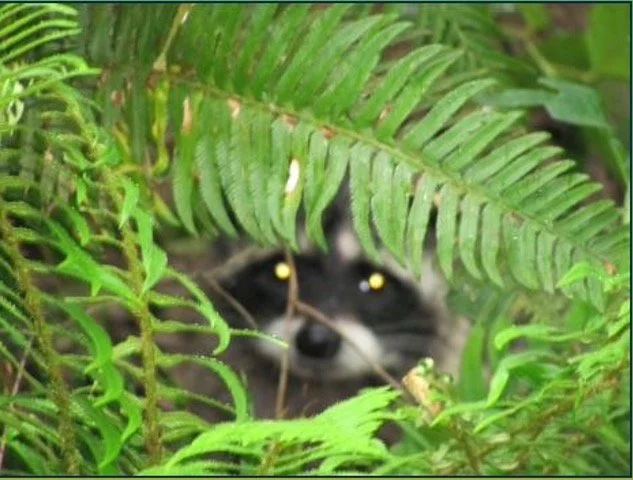
Habitat conservation is the practice of protecting, preserving, and restoring natural environments so that plants, animals, and ecosystems can survive and thrive. Most of us live in Puget Sound because we value the natural world so co-existing with wildlife and native plant species is a desired objective. Through thoughtful site development (Green corridors, etc.) and site-specific native vegetation that provides food and shelter for wildlife, you can turn your property into a habitat preserve!
Russell Link’s ‘Landscaping for Wildlife in the Pacific Northwest’ is an inspiring read with great images!
HDPE Tightline Installation and Repair
Website under construction - more coming soon!
Invasive Removal
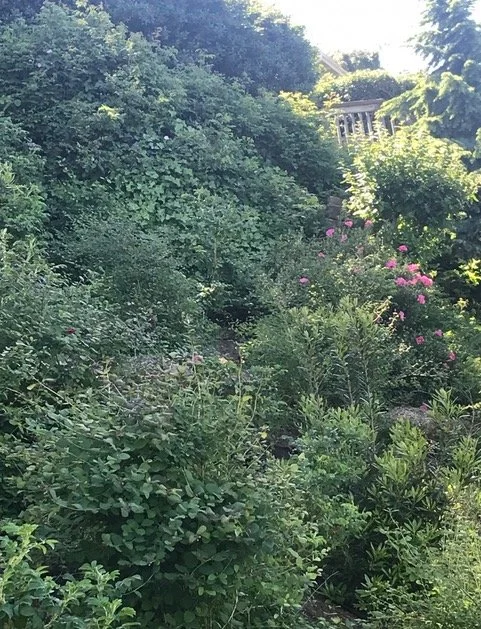
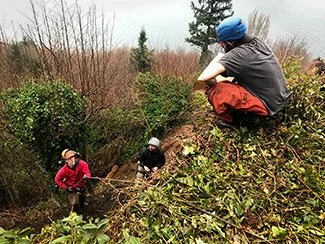
Invasive removal refers to the process of identifying and removing non-native or invasive plant species from a particular habitat or ecosystem. Invasives can disrupt local ecosystems, outcompete native flora and fauna, and lead to biodiversity loss. In the case of bluff restoration, local invasives such as English Ivy (Hedera helix) and Himalayan Blackberry (Rubys armeniacus) are often masking signs of failure that could be mitigated if detected early. They are also shallow rooted, not only lacking in stabilizing properties but their weight can actually cause shallow landslides, taking all the topsoil with them.
Invasive removal techniques are site specific. In some cases, hand removal and seasonal inspection is sufficient, but geotextiles are often required to prevent rapid return and protect bare soils while beneficial native plant communities can establish.
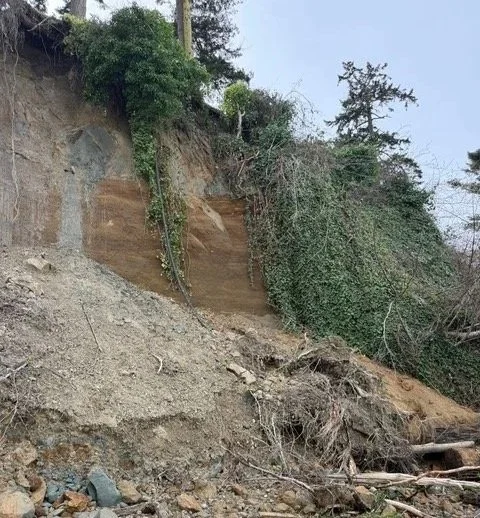
In the photo below, you see the roots of English Ivy at the bottom of the slide, which was likely caused by the weight of the ivy itself. The ivy is also masking a serious undercut which isn’t visible from the upper edge of the bluff.
Landscape Design and Installation
Website under construction - more coming soon!
Live Staking
Website under construction - more coming soon!
Low Impact Site Development
Low Impact Site Development (LID) is an approach to land planning and construction that minimizes environmental disturbance while still allowing development.
Our equipment operators’ expertise combined with our extensive knowledge of our region's natural processes yields a superior design.
Our techniques focus on working with natural systems rather than replacing them. Instead of clearing, grading, and piping everything away, we preserve natural features and manage water, soil, and vegetation in place.
For instance, selective clearing allows for the creation of woodland walking paths and rain gardens, and above ground swales are a beautiful way to mitigate standing water.
Native Plants Design, Installation, and Maintenance
Website under construction - more coming soon!
Rain Garden Design and Installation
Website under construction - more coming soon!
Stonework
Website under construction - more coming soon!
Tram Site Preparation and Stabilization
Website under construction - more coming soon!
Wetlands Restoration
Website under construction - more coming soon!